How Many Types of Pranayama Are Used in Hatha Yoga?
In Hatha Yoga, pranayama (controlled breathing) is one of the most important pillars. It helps regulate prana (life force energy), calm the mind, balance the nervous system, purify the nadis (energy channels), and prepare the practitioner for deeper meditation and spiritual growth.
While there are many pranayama techniques mentioned across yogic texts, **Hatha Yoga traditionally emphasizes six main types** that are most commonly practiced and taught. These six are widely accepted in classical Hatha Yoga schools and are central to the practice.
The 6 Main Types of Pranayama in Hatha Yoga
Ujjayi Pranayama (Victorious Breath)
A gentle throat constriction creates a soft ocean-like sound during nasal breathing. It builds internal heat, steadies the mind, and supports focused movement.
Benefits: Improves concentration, calms the nervous system, regulates temperature.
Kapalbhati Pranayama (Skull Shining Breath)
Forceful, rapid exhalations through the nose with passive inhalations. A cleansing and energizing breath.
Benefits: Clears the respiratory system, stimulates digestion, energizes the mind, removes lethargy.
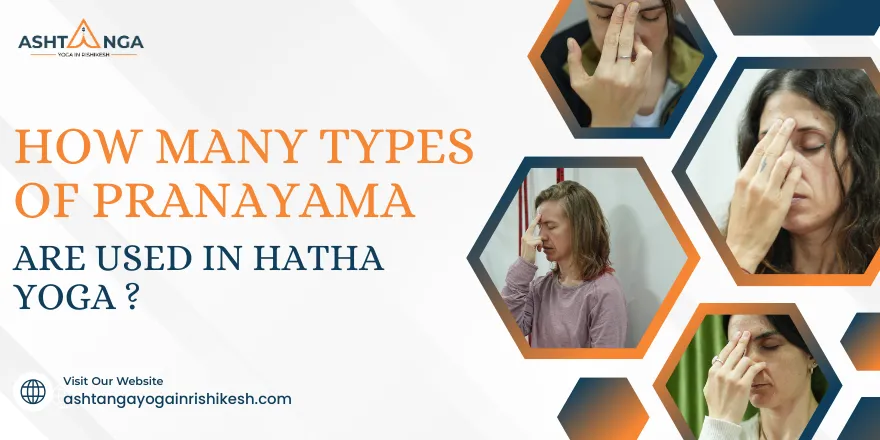
Anulom Vilom / Nadi Shodhana (Alternate Nostril Breathing)
Breathing alternately through left and right nostrils using the fingers to close one nostril at a time. A balancing and calming practice.
Benefits: Harmonizes left and right brain hemispheres, balances ida & pingala nadis, reduces stress and anxiety.
Bhastrika Pranayama (Bellows Breath)
Rapid, forceful inhalations and exhalations through the nose — like a bellows. A powerful energizing breath.
Benefits: Increases oxygen supply, boosts lung capacity, stimulates digestion, clears mental fog, awakens energy.
Bhramari Pranayama (Bee Breath)
Exhaling with a humming sound like a bee (mouth closed, humming in the throat). A soothing and meditative breath.
Benefits: Calms the mind, reduces anxiety & anger, relieves insomnia, enhances concentration.
Sitali & Sitkari Pranayama (Cooling Breaths)
Inhalation through a rolled tongue (Sitali) or teeth (Sitkari), exhalation through the nose. Cooling and refreshing techniques.
Benefits: Reduces body heat, cools the mind, relieves thirst, soothes inflammation and anger.
Why These 6 Pranayamas Are Central in Hatha Yoga
These six techniques are the most commonly taught and practiced in traditional Hatha Yoga because they:
- Purify the nadis (energy channels)
- Balance the nervous system (sympathetic & parasympathetic)
- Prepare the body and mind for deeper meditation
- Support physical health, mental clarity, and emotional stability
Experience Authentic Pranayama in Rishikesh
Rishikesh — the Yoga Capital of the World — is the perfect place to learn and deepen these powerful pranayama techniques under experienced guidance. At Ashtanga Yoga in Rishikesh, we teach traditional Hatha pranayama in our classes, workshops, and retreats, helping you master breath control and experience its profound effects on body, mind, and energy.
Final Thoughts
Hatha Yoga traditionally emphasizes **six main types of pranayama** — Ujjayi, Kapalbhati, Anulom Vilom (Nadi Shodhana), Bhastrika, Bhramari, and Sitali/Sitkari. Each offers unique benefits, from energizing and cleansing to calming and cooling.
Start with one or two techniques under proper guidance, practice consistently, and let the breath become your greatest teacher. Join us in Rishikesh to explore these timeless practices in their most authentic form.