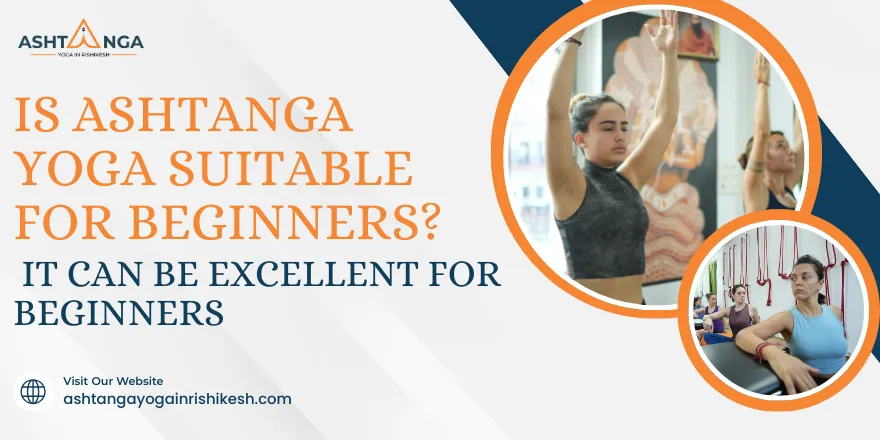
Is Ashtanga Yoga Suitable for Beginners?
Ashtanga Vinyasa Yoga is renowned for its dynamic, disciplined, and physically demanding nature. While it may seem intimidating at first—due to fixed sequences, continuous flow (vinyasa), and emphasis on breath, strength, and precision—many beginners successfully start and thrive in Ashtanga with the right approach, modifications, and guidance.
In Rishikesh, the Yoga Capital of the World, beginners find an ideal environment to begin this powerful practice safely and mindfully. At Ashtanga Yoga in Rishikesh, we welcome newcomers and provide personalized support to help you build a strong, sustainable foundation.
Why Ashtanga Yoga Can Feel Challenging for Beginners
Physically Demanding
Continuous vinyasa transitions (e.g., Chaturanga → Upward Dog → Downward Dog), combined with postures requiring strength and flexibility, can be intense for those new to yoga.
Fixed Sequences
The Primary Series follows a strict order—memorizing the flow can feel overwhelming at first.
Breath, Drishti & Bandhas
Synchronizing ujjayi breath, maintaining gaze points (drishti), and engaging energy locks (bandhas) requires focus that beginners may find difficult to coordinate initially.
Why Ashtanga Yoga Can Be Excellent for Beginners
Structured & Progressive
The fixed sequence provides clear progression—beginners can focus on the first few postures and gradually add more as strength and confidence grow.
Highly Adaptable
Experienced teachers offer modifications (e.g., knees down in Chaturanga, shorter holds, props) to make every pose accessible and safe.
Mysore-Style Classes
In traditional Mysore-style practice, students move at their own pace with individual guidance—perfect for beginners to learn slowly and correctly without pressure.
Builds Discipline & Confidence
Repetition and gradual mastery foster patience, resilience, and a deep sense of accomplishment—qualities that benefit beginners profoundly.
Tips for Beginners Starting Ashtanga Yoga
- Start Slow: Focus only on Sun Salutations and the first few postures of the Primary Series (Yoga Chikitsa)—add more as you gain comfort.
- Master the Breath First: Practice ujjayi breathing independently before linking it to movement.
- Seek Proper Guidance: Join beginner-friendly led classes or Mysore-style sessions with experienced teachers who prioritize alignment and safety.
- Use Modifications Freely: Bend knees in forward folds, use blocks, or rest in Child's Pose—modifications are encouraged, not a sign of weakness.
- Commit to Consistency: Regular short practices (even 20–30 minutes) build far more progress than occasional long sessions.
- Be Patient & Non-Judgmental: Progress in Ashtanga is gradual—focus on effort and breath, not perfection.
Should Complete Beginners Start with Ashtanga?
If you're brand new to yoga and have no prior movement experience, starting with a gentler style (e.g., Hatha or slow Vinyasa) can help build basic strength, flexibility, and body awareness before transitioning to Ashtanga. However, many complete beginners thrive in Ashtanga right away when they:
- Attend beginner-focused or Mysore-style classes
- Receive patient, individualized instruction
- Approach the practice with humility and consistency
Why Start Ashtanga in Rishikesh?
Rishikesh offers the perfect environment for beginners—serene energy, expert teachers trained in the traditional lineage, and a supportive international community. At Ashtanga Yoga in Rishikesh, we specialize in welcoming beginners, providing clear modifications, and guiding you safely into the Primary Series through Mysore-style and led classes.
Final Thoughts
Ashtanga Yoga is not the easiest entry point for beginners—but it can be one of the most rewarding. Its structure, discipline, and gradual progression build incredible strength, focus, and self-awareness when approached with patience and proper guidance.
If you're ready to commit to consistent practice and embrace the journey, Ashtanga will meet you exactly where you are. Join our beginner-friendly drop-in or intensive classes in Rishikesh and discover the transformative power of this timeless tradition.