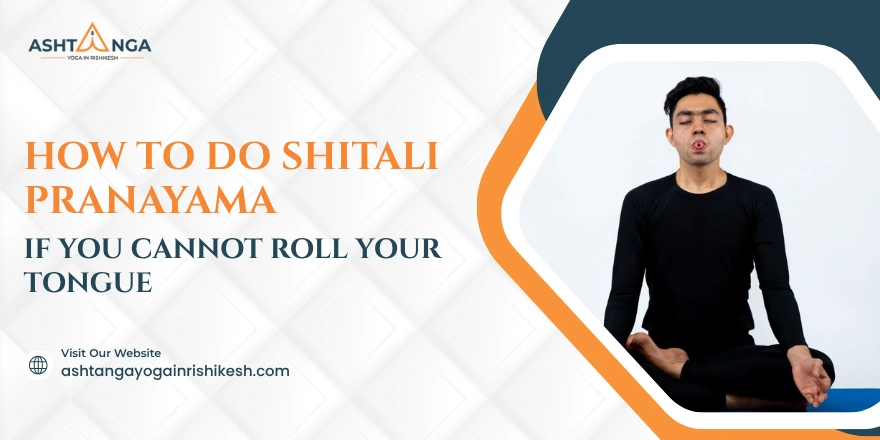
How to Do Shitali Pranayama If You Cannot Roll Your Tongue
Many people want to try Shitali pranayama, but they get stuck at the first step. They cannot roll their tongue into a tube. If this is you, don't worry. You can still enjoy this cooling breath. This blog explores the concept of Shitali pranayama, how to perform it and an easy method to practise without rolling the tongue.
Short Answer: If you are not able to roll your tongue, place your tongue lightly behind your teeth. Take in air through the small opening between teeth, breathe out through the nose. This is known as "Sitkari Pranayama" and provides a similar cooling effect.
What Is Shitali Pranayama?
It is a yoga exercise technique of breathing. “Shitali” means "cooling", and “pranayama” means “breath control". So, it's a breath of cool.
Roll your tongue like a tube, in the traditional manner. You inhale the air through the tube, which makes it cool like drinking a glass of air through a straw. Then slowly inhale through the nose and back out again through the nose. It is frequently used on hot days, after physical activity, or when people are angry and restless. It's among the many breathing exercises and you can continue reading about the types of pranayamas in our post.
Why Can Some People Not Roll Their Tongue?
The tongue is a small Body Skill. Some can do it easily and some can't. Is often hereditary. It's not a sign that you are wrong at yoga. Don't force or pull your tongue or it will hurt. Yoga shouldn't cause pain.
Shitali Pranayama Benefits
Here are the benefits of Shitali pranayama that people enjoy:
- Relieves heat: Keeps cool on a hot day.
- Calms the mind: The slow, soft breath can help you feel quiet and less angry.
- Good After Practice: It is a great way to cool down after doing good practice!
- Control focus: The soothing breath helps to keep your mind in the present.
- Easy to learn: No tools required, can do anywhere.
The advantages of these Shitali pranaymas are regarding comfort and calm. This is not a medicine, so if you experience a health issue, please consult your doctor.
Shitali Pranayama Steps: The Classic Way
First, let's take a look at the regular way to get the idea.
- Sit in a comfortable position with your back straight.
- Place hands on knees and close eyes.
- Stick out your tongue a little and roll its sides to make a tube.
- Breathe in slowly through the tube. Feel the cool air.
- Draw in and close your mouth.
- Slowly exhale through the nose.
- Repeat 5 to 10 times.
How to Do Shitali Pranayama If You Cannot Roll Your Tongue
If you don't want to roll your tongue, you can get the same cooling effect by following this simple procedure.
Option 1: The Teeth Method (Sitkari)
- Sit up tall with face and shoulders relaxed.
- Gently close teeth. Do not bite hard.
- Open your mouth with your teeth visible (a soft smile).
- Slowly breathe in through the spaces between your teeth. Some soft “ssss” noises might be heard.
- Close your mouth and slowly exhale through your nose.
- Repeat 5 to 10 times.
Option 2: Tongue behind teeth method.
- Rest the upper tongue gently against the back of the upper teeth.
- Gently open your mouth to allow for breathing.
- Slowly inhale through the mouth. It will take a chill bite.
- Close your mouth and breathe out through your nose.
- Repeat 5 to 10 times.
Choose 3: The Small “O” Method
Shape your lips into a small “O” to make it as if you are drinking through a thin straw. Slowly inhale and then exhale through your nose. This is a gentle option if the other two are uncomfortable.
Each of the three options involves taking in air through the mouth, breathing out through the nose and maintaining slow breathing throughout the Shitali pranayama technique.
Common Mistakes to Avoid
- Forcing the tongue. If it doesn't roll, use the 'teeth' technique.
- Rapid and short, shallow breathing. The breathing in should be slow and smooth.
- Exhaling out of the mouth. Always exhale through the nose.
- Doing too many rounds. Start with 5 rounds. Slowly go up to 10 or more.
- Working in dusty or smoky environments. Breathing through the mouth, so select clean fresh air.
Who Should Be Careful?
Shitali is a cooling breath, so it may not suit everyone. Take caution or consult your doctor if you:
- Have a cold, cough, or sore throat
- Have low blood pressure
- Have asthma or a lung problem
- Already feeling very cold, or cold weather.
Stop when feeling dizzy or uncomfortable and take in as much air as normal.
Best Time to Practice
This is best done on a warm day, in the early or late afternoon, in an airy clean space. You can also do it after yoga asanas to cool the body. If you need some rest and balance in your practice at the end you can use Anulom Vilom Pranayama done after the Shitali.
Learn Pranayama in Rishikesh.
Rishikesh, on the banks of the Ganga, is known as the yoga capital of the world. It is special in the way that pranayama is learned here – for the use of fresh air and experienced teachers. Your teacher will be able to listen to your problems & share what the proper way will be for your body, as well as simple choices if the task sounds difficult. Our teachers thoroughly guide you in Ashtanga Yoga, Rishikesh, allowing you to take the time to start and feel safe and comfortable.
Final Words
The Shitali Pranayama is a simple and gentle Pranayama without having to have a perfect tongue roll. The teeth method should be used if you are unable to roll your tongue. Take a deep breath, relax and halt if it doesn't feel right. Take some calming, quiet moments and you'll feel cool and calm.