
Morning Yoga for Energy: 7 Simple Poses to Start Your Day Right
Waking up tired can make the whole morning feel slow. Rather than reaching for your phone directly after coming out of bed, allow your body a couple minutes for mindful movement. Yoga in the morning for energy can help you take your muscles and body out of their sleep, get rid of any stiffness and get your mind ready for the day.
It's not a yoga trick; you need to be at a high level to experience a difference. Think of a series of easy poses, and a different morning routine can be established. By practising yoga regularly, along with consistent breathing, it can be a natural way of life.
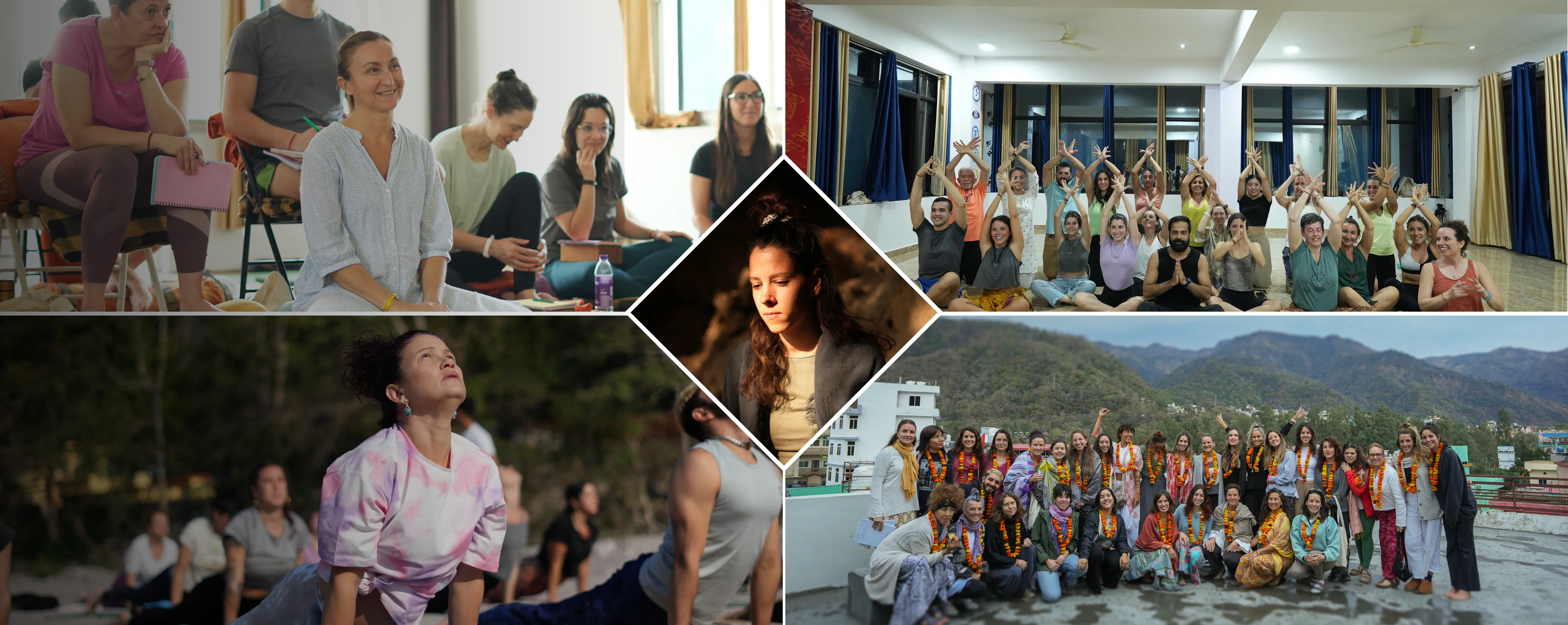
The morning practice also provides a beautiful experience for yoga beginners in Rishikesh to immerse themselves in the traditional yoga ambiance. Early practice is more fun in the peaceful, fresh air and without the stress of learning in such an environment.
Why Choose Morning Yoga for Energy?
Yoga in the morning isn't a difficult exercise. The aim is to not beat your body down once you first wake up. Rather, it slowly brings your body from a state of rest to motion.
Any good morning sequence can contain:
- Gentle spinal movements
- Standing yoga poses
- Simple stretches
- Balance exercises
- Breath awareness
- A short flowing sequence
- Quiet relaxation
Movement is regular and helps with flexibility, strength, balance and body awareness. A new book on morning yoga also advises against making yoga too lengthy.
What Makes Morning Practice Different?
After several hours in the same position you may feel less mobile right after you get up. So, it might be a challenge to start right into deep stretching exercises.
Instead, begin slowly.
Start – warm up – build movement – breathe – relax
It's easier to follow your yoga routine in the morning to get a little energy, and it is also more convenient for beginners.
7 Yoga Poses for Morning Energy
This series is gentle and incorporates fluidity, strength, balance and movement. You can practice the poses in sequence or do a longer morning flow with all of the poses.
1. Tadasana – Awaken your posture
Tadasana, or Mountain Pose, is a simple standing pose which can be used as a starting pose in yoga asanas for morning energy.
How to Practice Tadasana
- Standing up straight, feet rooted to the ground.
- Maintain a normal posture of the spine.
- Relax your shoulders.
- Allow arms to be resting on sides of body.
- Take slow, comfortable breaths.
- Keep your attention on your posture.
Hold: 30–60 seconds
Why Start With Tadasana?
This pose will allow you to become conscious of your body and start with more dynamic movements. It can also assist you in concentrating on the posture of the body's legs and breathing.
2. Cat-Cow Pose – Loosen the Spine
Cat-cow is a gentle exercise to get some movement into an aching back after a good night's sleep.
Steps for Cat-Cow
- Get on hands and knees.
- Wrists should be below shoulders.
- Don't let your knees come above the level of your hips.
- Breathe in, slowly raise chest.
- Breathe out, and round your spine.
- Slowly repeat the exercise a few times.
Repetitions: 6–10 rounds
This pose is one of the simplest yoga postures for energy, as it does not involve a complicated position. The non-stoppiness also provides for a trouble-free start to your morning workout.
3. Utkatasana – Build Morning Strength
Commonly known as Chair Pose, Utkatasana adds strength to your morning practice.
Practice Tips
Bend the knees like you're sitting on an invisible chair, and stand tall. If possible, raise arms and lift chest.
Hold: 3–5 breaths
Utkatasana is good for those who want yoga for energy and stamina, as it provides an active challenge to the legs, core and body.
Tips for beginners: Avoid sitting as low as possible. When you're getting out of a start, you can have a small knee bend.
4. Adho Mukha Svanasana – Stretch the Whole Body
One of the more popular yoga poses is downward facing dog, which can add a good stretch to your morning routine.
How to do Downward-Facing Dog
- Begin on your hands and knees.
- Draw your toes in under your feet.
- Raise buttocks up and back.
- Lengthen your spine.
- Bend knees slightly if necessary.
- Take several slow breaths.
Hold: 5–8 breaths
Don't push heels towards the floor. The primary purpose is to make it easily manageable in the back, without any breathing issues.
5. Virabhadrasana II – Add Strength and Focus
Warrior II is an outstanding standing posture that can get your morning workout going.
Warrior II Steps
- Keep legs spread apart.
- Turn foot to one side.
- Bend forward the front knee.
- Hold the back leg straight.
- Pull arms outwards in opposite directions.
- Smoothly observe your front hand.
Hold: 4-6 breaths on each side
It is an excellent addition to yoga poses to start the day feeling energised, it has strength, stability, balance and concentration.
Why Include Standing Poses?
A morning routine doesn't have to consist of just stretching. The sequence can be more active by using standing postures and can be used to slowly develop physical strength.
6. Bhujangasana – Open chest pose
Cobra pose, Bhujangasana, can be done following standing postures or in a continuous sequence.
Simple Bhujangasana Method
On your belly, have your hands close to your shoulders. Squeeze down into the floor, lift the chest only as far as comfortable.
Don't tense the shoulders and do not force the back forward into a great bend.
Hold: 3–5 breaths
As your website already has an article detailing the benefits of Bhujangasana, this pose is not the main topic of your morning sequence but rather is a component.
7. Surya Namaskar – Finish With Dynamic Movement
Surya Namaskar Yoga is a great exercise to unite a number of movements.
It combines:
- Forward bending
- Backward extension
- Strength
- Stretching
- Breath coordination
- Continuous movement
How Many Rounds Should Beginners Do?
If you are a new yogi, start with 2-3 slow rounds. Work on learning the movement; do not expect to get through a lot of rounds in a short period of time.
The number of rounds can be increased as practice starts to become comfortable.
The fact that this blog is about the Surya Namaskar is enough to link readers to your website, which already has a detailed article about Surya Namaskar.
Yoga for Energy and Stamina: How to Build a Stronger Routine
When you are practising yoga to give yourself energy and stamina, don't only practice challenging postures!
Regular movement, controlled breathing, strength work & progressive movement are the steps to developing stamina.
Complete the 3 Step Progression
Week 1 – Build the Habit
Practise 5-10 minutes – concentrate on proper movement.
Week 2 – More Movement
Add some more practice on how to do that, 10-15 minutes.
Week 3 – Make a Flow
Link some of the postures together with the breath and then couple in some Surya namaskar.
The Important Rule
Don't do an all-at-once fashion.
You can increase:
- Practice time
- Number of rounds
- Pose-holding time
- Flow speed
However, don't do this all at once!
Best Time to Practice Morning Yoga
No one time is totally ideal. It is the time that suits you best that is the most helpful.
Early morning is a popular time, as there are fewer distractions, and daily duties have not yet begun. Having a morning yoga session with the intention to start the day can also help to establish a clear boundary between sleep and morning.
Before Your Practice
Keep these simple points in mind:
- Training in a safe, well-ventilated area.
- Clothing should be loose-fitting and allow for movement.
- Have sufficient space for the mat.
- Don't rush into challenging postures.
- Access drinking water as necessary.
- Play within your current level of ability.
It can also be easier for many people who are new to yoga to do yoga on a relatively empty stomach.
5 Common Morning Yoga Mistakes to Avoid
Yoga is a delicate art, even for the simplest of poses to get your energy going in the morning.
1. Starting Too Fast
It may take some time for your body to "wake up". Start slowly, with gentle movements.
2. Holding Your Breath
You should be able to breathe easily. Do not be able to take a deep breath in so as to take a longer breath out.
3. Going Too Deep
Just because a stretch is deeper, it does not necessarily mean it is a better stretch.
4. Copying Advanced Practitioners
You might be more flexible and/or stronger than another person.
5. Making the Routine Too Long
A short session of 15 minutes per session (repeated regularly) may be more beneficial to your lifestyle than a longer session of an hour (repeated sparsely).
Quick Morning Yoga Checklist
Remember: Before getting on your mat:
- Start gently
- Maintain the same rhythm for breathing.
- Practice on a comfortable surface
- Concentrate on motion, not perfection
- Select poses that you are capable of
- End with some quiet breaths
- Practice regularly
Final Thoughts on Morning Yoga for Energy
The morning doesn't have to be a big deal when it comes to getting exercise. Just a couple of well strategically picked up moves can help you transition from rest to action and focus of the day.
Each of the seven poses in this sequence will provide you a different element, Tadasana is about stability, Cat-Cow is about movement of the spine, Utkatasana is about strength, Downward-Facing Dog is about stretching of the body, Warrior II is about stability, Bhujangasana is about opening the front body, and Surya Namaskar Yoga is about creating a flowing sequence.
If you are looking for morning yoga to get some energy in, go slowly. Practise for 5-15 minutes, maintain regular breathing and gradually increase your practice. When practised with regularity, yoga for energy and stamina can be more than just a morning exercise regimen; it can be a simple routine you do every day to start your day moving, focused and at ease.