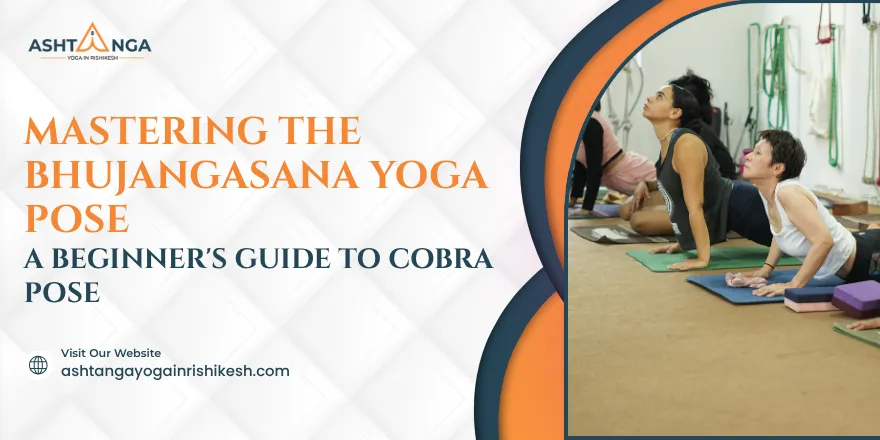
Mastering the Bhujangasana Yoga Pose: A Beginner's Guide to Cobra Pose
Ever noticed how bothersome the tightness is that you experience in your back after sitting for longer than an hour? A gentle yoga back bend is one pose which can restore the movement back into your body. Bhujangasana, or Cow Pose, is one of the basic backbends which can be carved up by newbies with caution.
The posture resembles a cobra's as it lifts its head up, hence the name, Cobra Pose. The principle isn't to raise your chest up as high as you can, though. The true purpose of the movement is using the breath, with slow pace and maintaining a comfortable spine.
Here is instructions for practising Bhujangasana cobra pose yoga, tips on avoiding some of the common beginner's mistakes, how to modify this pose, and how to integrate it into a quick and easy yoga practice.
What Is the Bhujangasana Yoga Pose?
The bhujangasana yoga pose is a backbend looking pose, performed on the back. This will place you on your belly with your chest resting slightly up off of the ground while your lower body stays flat.
The name comes from the Sanskrit word "Bhujanga", which means cobra. Shape when upper body is lifted up, like cobra lifting its head.
Here's the yoga position bujhangasana which isn't just pushing the body upward with hands. Your back muscles need to be involved in the action, your arms should provide light support.
Why is Cobra Pose Good for Beginners?
A beginner does not have to squat so low in the pose. Initially, you can lift up the chest only slightly.
This makes cobra pose yoga (bhujangasana) beneficial for learning:
- Basic backbend movement
- Spinal awareness
- Shoulder positioning
- Controlled breathing
- Gentle chest opening
- Better body control
It is important to respect your range of neck motion rather than to mock or mimic another pose.
Bhujangasana Yoga Pose: Step-by-Step Method
If it is understood in the correct sequence then the bhujangasana yoga pose is also safer.
Step 1: Prepare Your Body
Set up a yoga mat flat on a surface. Lie on your stomach with both legs straight out behind.
Maintain softness of feet and let forehead lie lightly on mat.
Step 2: Place Your Hands Correctly
Place palms to one side of chest. The arms should NOT extend very far or away from the body.
Don't place excess strain on hands. Their job is to help with the movement and not to lift your chest up.
Step 3: Raise the Chest Slowly
Take a slow breath in. Start to raise head and chest.
Use your back muscles and hands, if possible. Do not have shoulders raised too far above shoulders.
An important point of bhujangasana in yoga is, the movement to get into the position is to be made from the entire body and not from the arms alone.
Step 4: Find a Comfortable Height
Arms can not be straightened.
If your chest only moves a couple inches, it's perfectly okay. By not forcing a deep back bend, a smaller lift may work better for the beginner.
Step 5: Breathe and stay calm
Breathe normally when holding yoga position bhujangasana.
Don't go without air for too long. Maintain neck relaxation and keep eyes focused forward or slightly up and do not throw head back.
Step 6: Come Down Slowly
Then inhale and pull chest back down to mat.
Wait a couple breaths before the repeat.
How to Make Bhujangasana Cobra Pose Yoga More Comfortable
A lot of people beginning in yoga believe that a strong backbend ought to be deep. This is not true.
In yoga, it's comfort and control that are more important than height in the case of bhujangasana cobra pose.
Keep Your Elbows Soft
At times, a straight arm can get their beginner too over-ambitious. If it feels more comfortable, maintain a slight bend in elbows.
Relax Your Shoulders
Your shoulders should not move toward your ears. Pull them down and back.
Do Not Force the Lower Back
It's important to not let the strain be placed on the lower back only. Gently lower legs and back muscles, with stillness of the motion.
Keep the Legs Active
Roll feet and extend legs backward. It keeps the yoga position Bhujangasana stable.
Common Mistakes in the Yoga Pose Bhujangasana
If the poses are rushed, they can become uncomfortable even in the simplest poses.
Lifting Too High
Often the problem is making attempts to get the chest as high as could be.
Better to have a controlled position in the lower portion of the spine than a high position in the spine that causes pain.
Pushing Hard With the Hands
You don't want to use your hands as a hazard. Any time you push hard, you could pose a risk of over-stressing the lower back or shoulders.
Moving the Head Too Far Back
Avoid throwing head backwards. Maintain a long and comfortable neck.
Holding the Breath
Slow breathing is an integral part of the practice. As your breathing starts to shorten or become shallow/sound different, step down from the pose.
Letting the Elbows Move Out
With the elbows wide, they may lose their natural position of the shoulders. Closer to body on the side.
These subtle adjustments can help make the bhujangasana yoga posture seem more manageable.
Bhujangasana Yoga Pose benefits: Everyday Movement.
The primary benefit of this posture is the action you make as much as how far you can go. This is what your body learns to do while being aware of it.
Practising frequently can also aid to sustain:
- Gentle spinal mobility
- Stronger back muscles
- Chest and front-body opening
- Improved consciousness of posture
- Easy better movement following sitting periods
- A mindful connection between breath and movement
For anyone who gets stiff from sitting frequently, there's also Yoga for Back Pain, which is a part of a more comprehensive movement regimen.
Yoga shouldn't be practised to elicit an unusually sharp or painful sensation, however. You should feel in control of your practice and comfortable.
How Bhujangasana Cobra Pose Yoga Works With Other Poses
An equal yoga class does not need to feature simply backbends. Changing between various motions may help to make the body "feel" more balanced.
Practising a gentle forward movement after the backbend, or adding a hip and spine sequence are examples of practices.
Bridge Pose Yoga can also be part of the beginner's workout, as it provides you another option for tone-building exercises for the back, hips, legs and chest.
It isn't an attempt to do lots of poses. Several exercises with proper breathing and focus can suffice.
What is the time to do Bhujangasana?
Bhujangasana can be done in the morning yoga as well as in a regular yoga class.
When one's abdomen is empty, it is preferable to practise yoga. Try not to do the pose straight after a large meal.
Here is a basic starter workout:
- Sit quietly and breathe slowly a few times.
- Warm up the shoulders and spine.
- Do gentle yoga Bhujangasana – cobra pose.
- Rest between repetitions.
- Find one more relaxing yoga position.
- Complete with breathing relaxation.
It's not necessary to train for a long period to master the movement. Rushing isn't helpful, consistency and good technique.
Who Should Be Careful With Bhujangasana?
While the yoga pose Bhujangasana may be recommended as a beginner position, it is not appropriate for all people at all times.
Be extra careful if you have:
- A recent back or abdominal injury
- Serious wrist or shoulder pain
- Recent abdominal surgery
- A condition that makes backbending uncomfortable
- Pregnancy, unless your qualified professional has advised the practice
Practise ceases if it causes sharp pain, numbness or dizziness, or abnormal discomfort.
A Simple Way to Master the Yoga Pose Bhujangasana
Learning the yoga position bhujangasana doesn't entail the deepest back bend. It involves gaining control over your body.
Do a small chest lift. Maintain mobility in your legs. Relax your shoulders. Breathe slowly. Be aware of your back's position.
As you progress in your practice, the movement will become more familiar to your practice.
The best yoga pose is Bhujangasana, made with a steady breath, with good awareness, and no force.
Final Thoughts
Yoga Indian cobra pose exercise Bhujangasana is simple but it's an important exercise to learn 'more is not always better' lesson.
If you have little or no experience, the important thing is to keep the movements slow, have good body orientation, breathe comfortably and practise regularly. Do not set the position of the body an advanced position or raise the chest to a very high position.
Listen to your body, be patient and allow your reach to develop gently. The Cobra Pose, as practised in conjunction with other appropriate yoga exercises may be a beneficial component of an well balanced yoga regimen.